Clash Royale Deck Builder
Load your cards


Click for detailed breakdown
Complete your deck to check its stats
Click for detailed breakdown
Complete your deck to check its stats
Load your cards













































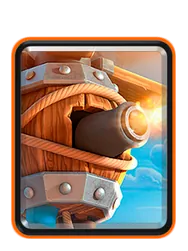

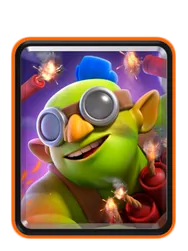
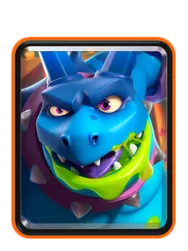
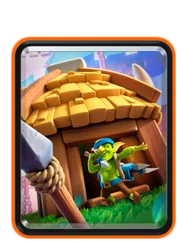















































 How does the deck builder work?
Build a Clash Royale deck one card at a time and see what it is doing as you go. Pick a slot and the card list reorders itself by what actually wins alongside the cards already in the deck, measured across real battles rather than taken from someone's list of good cards. Average elixir, the four card cycle and the deck's weak points update on every change.
Suggestions from measured play
Sort by Suggested to fill the selected slot, or the first empty one. What the deck is missing, like air defense or a spell, comes first, and within that the cards are ordered by how often players with the same cards run them and how those games go. It also points out an Evo or Hero slot holding a card players rarely play that way.
Live deck stats
Average elixir counts all eight cards. The four card cycle counts only the cheapest four, which is what decides whether you get back to your win condition before the answer to it comes down. Under them sit Attack, Defense, Versatility and Synergy, and all six move on every swap, so you see what a card costs you as well as what it gives.
Your own card levels
Enter a player tag to load the levels you actually own, then sort by level to see what is realistic to play now rather than after a month of upgrades.
 Questions people ask
How much elixir should a Clash Royale deck cost?
Most competitive decks land between 3.0 and 4.0 average elixir. At 3.0 or less, with the four cheapest cards costing 9 or less together, the deck plays as a cycle deck and wins by getting back to its win condition first. From 4.1 up it is a heavy deck that has to survive to double elixir. The average matters less than the four card cycle: two decks at 3.4 play nothing alike if one cycles in 9 elixir and the other in 13.
How many win conditions does a deck need?
One that the deck is built around, and at most one cheap secondary threat. Two heavy win conditions usually means neither gets the support it needs, and no win condition at all means you can defend forever without ever closing a match.
What makes a deck weak to air?
Fewer than two cards that can hit air. One anti air card is one card the opponent has to remove, and after that a Balloon or Lava Hound has nothing left to answer it.
What cards should a good Clash Royale deck have?
A win condition you can actually close with, then the cards that keep it alive. In practice: a tank or mini tank to lead the push, at least two cards that hit air or a Lava Hound ends the match on its own, something to kite troops off your tower, splash for swarms, a ranged card, a tank killer for the PEKKAs and Golems, and a small spell for chip and swarm clears. A big spell on top is a bonus. Most decks that feel awful on ladder are running two win conditions and no anti-air.
What do Attack, Defense, Versatility and Synergy mean?
Attack is how much pressure the deck can really put on a tower. Eight strong cards with no real win condition still score low, because a push you cannot finish is just an elixir donation. Defense is how many of the jobs above the deck has covered. Versatility is how many different pushes your cards can answer, instead of hard countering one and folding to the rest. Synergy is the only number that comes from ladder games other than yours: how these cards have actually performed side by side, not whether they look like a deck.